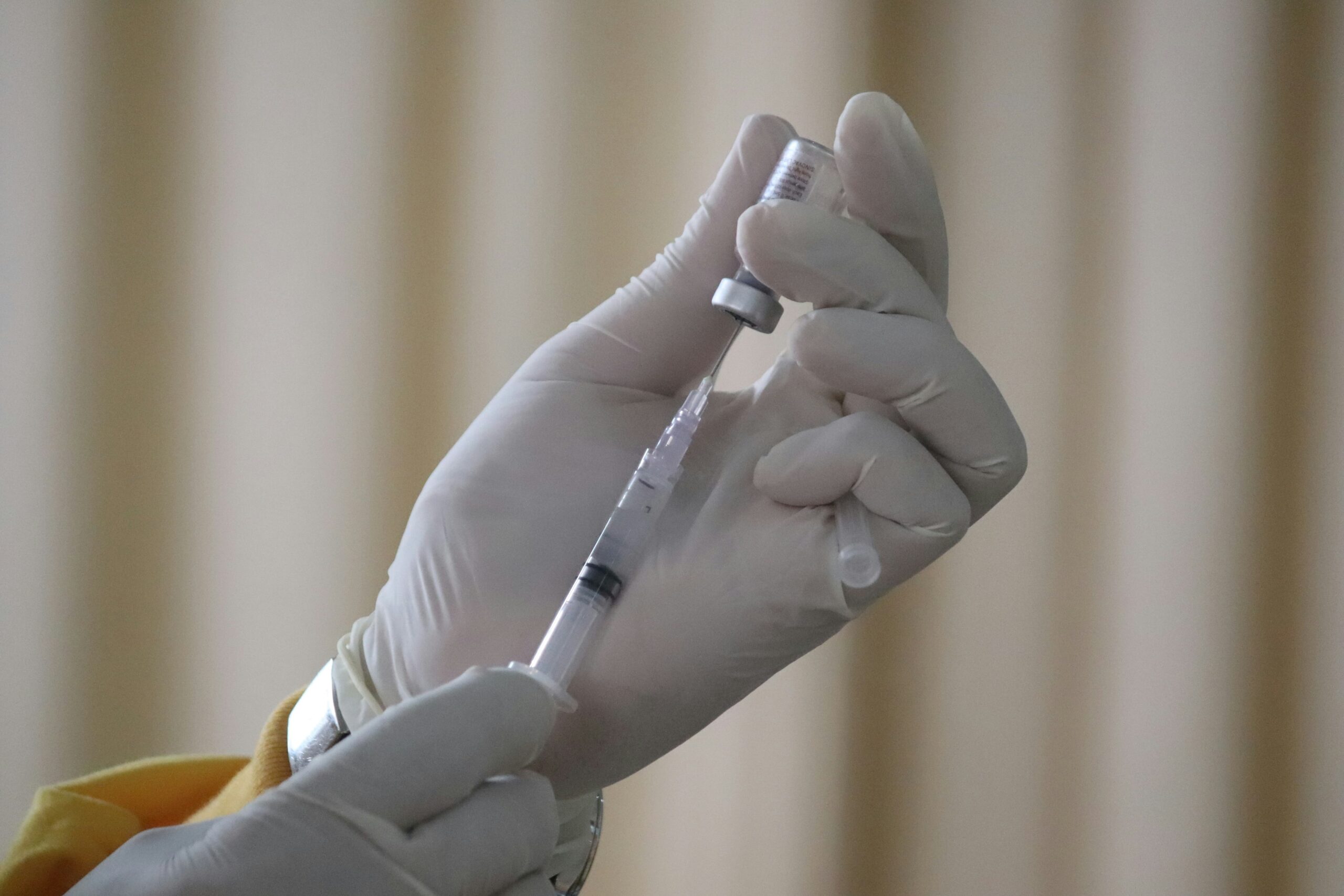
The rumor of vaccines causing autism started decades ago with one man – Andrew Wakefield. His studies would start a misinformation movement that continues to gain momentum. Today, we will break down the studies he published, where they went wrong, and their impact.
The Researcher
Andrew Wakefield now stands as an infamous figure in medical research after his studies on the measles, mumps, and rubella (MMR) vaccine. Prior to this work, he was a respected gastrointestinal doctor and scientist at the Royal Free Hospital in London. While his studies were grounded in gastrointestinal symptoms, he would branch out into autism. This is a specialty he clearly did not have expertise in.
After follow-up studies proved Wakefield’s experiments to be deeply and intentionally flawed, he was stripped of his UK medical license. The disgraced scientist then moved to the US where he found allies in Austin, TX. Working alongside politicians and Hollywood producers, he has promoted anti-vaccine messaging, legislation, and even films. This has cemented him as a seldom recognized but central figure in anti-vaccination movements today.
The First Study
Wakefield’s first and arguably most impactful study involving a connection between autism and vaccines was published in 1998. This study consisted of only twelve subjects – not enough to make generalized conclusions about the larger population. The article stated that the children had developed autism and gastrointestinal issues within a month of receiving the MMR vaccine. Therefore it was concluded that the vaccine caused autism. Multiple issues are present with this conclusion.
To begin with, correlation does not equal causation. Jumping to conclusions that something causes another simply because they are correlated can lead to some pretty bizarre claims. Such as taking the correlation between murder rates and ice cream sales to mean that eating ice cream causes people to become serial killers. A more reasonable explanation that has been presented is that symptoms of autism often emerge around the same age children are recommended to get the MMR vaccine.
Without a control group, it is impossible to draw definitive conclusions like Wakefield did. He chose only to look at children who were vaccinated and showing signs of autism. A proper study would have included a group that was unvaccinated in order to compare rates of autism. It is suspected by many that Wakefield deliberately handpicked the subjects he figured would fit his hypothesis and discarded cases that did not. In short, he took a group of children and said “look, they are vaccinated and have autism so therefore vaccines cause autism”. He would not learn from these errors.
The Second Study
In 2002, Wakefield and his colleagues published a second study in which they studied intestinal tissue for the presence of the measles. This time, they did compare samples of children with and without autism. They found that a high percentage of those with autism also had the measles virus whereas only a few of those without autism had the marker. Just like in the previous study, these findings were the result of bad science and intentional manipulation.
An individual having a marker for a certain virus is not a definitive indication that they were vaccinated. These markers also appear in tissue after someone has caught the virus and gained natural immunity. There are ways to test if the virus is present due to the vaccine or due to the virus itself. However, the researchers neglected to utilize these methods and instead assumed all cases were vaccinated. It has also been noted that the test for measles has a high false positive rate. Issues like this can often be worked around by retesting samples but there is no note that any precautions were taken.
The most glaring evidence for intentional manipulation is the lack of a blind. Blinds prevent researchers from identifying which group a sample or subject is from. In research, blinds are used to prevent bias and intentional manipulation. Without this, there is no way to confirm that results were not changed or influenced by the researchers.
Impacts
These studies, despite their serious errors, have had far reaching ramifications across the globe. Shortly after the publication of the first article, vaccination rates in the UK fell. This would be echoed in many other countries in the following years. While there were previous issues that caused some people to delay or refuse vaccinations, vaccine hesitation became more prevalent.
Entire groups based around misinformation now lobby against vaccine mandates or discourage others from vaccinating their children. Earlier this year (2025) we saw a resurgence of measles in Texas. This was a preventable health crisis that occurred in a community that was influenced by such groups. It is not just vaccines people have become skeptical of, however.
Both those for and against vaccines have had increased distrust of health institutions. Many in the anti-vaccine community believe Wakefield uncovered a conspiracy of sorts and are concerned that profits are held over risks and individual choice. On the other hand, those who recognize the malpractice in Wakefield’s work worry these types of practices may be more widespread than we realize. There are many great doctors and researchers out there; but that does not change the impact that bad science has had on the industry.
What We CAN Learn From This Study
Flawed studies, like Wakefield’s, can still teach us great lessons. This case is often used to teach students the importance of research guidelines, follow-up studies, and ethics. Research methods like blinds or control groups are not merely suggestions; they are essential components that ensure accuracy and legitimacy. Following research guidelines also protect researchers from losing their licenses due to malpractice.
Many studies investigating the alleged link between autism and vaccines have been conducted since 1998. The results overwhelmingly show that vaccines do not cause autism. Findings gain reliability and validity when they are proven again and again through multiple studies. Instead, Wakefield’s claims have been proven to be false. Basing your decisions off of information verified by multiple sources is always safer than only listening to one. Despite all of this, a single article can still have lasting impacts. Doctors and researchers are supposed to be experts. When one shows bias and intentional manipulation, it casts a shadow on all.
For more on the issues with Wakefield’s studies and information on current research, please see…
Making Sense Of Dr. Andrew Wakefield Now (Texas Children’s Hospital)
Vaccines and Autism (Children’s Hospital of Philadelphia)
Vaccines Don’t Cause Autism. Why Do Some People Think They Do? (John Hopkins University)
Note: The link for the CDC page on vaccines and autism has been removed due to misinformation being pushed by politicians. Medical and scientific experts back current research which denounce these claims. To view the original page, please see the Internet Archive‘s capture.
Leave a Reply