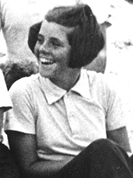
The first first word that comes to many people’s minds when they think of the Kennedy family is “tragedy”. You are likely familiar with the assassinations of Robert F. Kennedy and John F. Kennedy. However, there are many other shocking deaths, accidents, and heartaches that have plagued the family. This family has so many tragic stories, there is even a wiki page on the “Kennedy curse”. Today, we will be talking about the “hidden Kennedy” and how her life inspired critical advancements in disability rights.
Early Life
Rosemary Kennedy was the sister of President JFK and the first-born daughter to their parents, Joseph Patrick Kennedy and Rose Elizabeth Fitzgerald. It was quickly realized that Rosemary developed slower than her older brothers. Her difficulties grew more apparent when she began school. During this period, having a child with intellectual disabilities was seen as especially shameful. Many children were institutionalized for life. Fortunately, Rosemary was able to live at home and build strong bonds with her siblings despite her challenges.
She was frequently moved between schools. While some sources state this was to find her appropriate services and specialists, others claim this was simply due to her father’s work. Regardless of the reason these constant moves made it difficult to establish a routine and likely contributed to her struggles. While there is debate over what her diagnosis would have been today, many psychologists seem to agree Rosemary likely had autism. If this was the case, having a consistent schedule could have benefited her greatly.
Joseph Kennedy became extremely concerned about the public’s perception of his family when Rosemary began rebelling as a teen. She was caught sneaking out at night and supposedly began having more severe mood swings. This is when her father decided to take drastic measures.
Lobotomy
In the 1940s, a decade before the first psychiatric medication would become available, the lobotomy was considered a “miracle cure” for many mental illnesses and conditions. This procedure involved using a needle to sever the connections between the frontal lobe and the rest of the brain. Without the imaging and advanced surgical procedures we have nowadays, lobotomies often involved guesswork and resulted in horrific side effects. Unfortunately, Rosemary Kennedy would be one of the individuals to suffer severe consequences.
Despite reluctance from other family members, Joseph would arrange for his daughter (age 23) to undergo a lobotomy in late 1941. The impact was immediate. Rosemary lost her ability to walk, nearly all ability to speak, and would stare at walls for extended periods. After this, she would be institutionalized. The rest of her life would be spent at St. Coletta School for Exceptional Children in Jefferson, Wisconsin. There, she would be secluded from her family and society until her death at age 86 in 2005.
Lasting Inspiration
Rosemary’s tragic life inspired multiple members of her family to fight for disability rights. Her mother made many public speeches to raise awareness of special needs. Younger sister Jean Kennedy Smith founded Very Special Arts, which provided art programs to those with disabilities. JFK became the first president to sign legislation improving disability care programs. Their brother Edward Kennedy continued this work as a senator.
Perhaps the most inspired family member was her sister, Eunice Kennedy Shriver. Eunice, remembering all the fun times she had with Rosemary as a child, would dedicate her life to finding ways to support and include those with intellectual disabilities. She would open Camp Shriver in 1962 as a safe place for children with special needs to play. After its success, it would open annually, eventually evolving into the Special Olympics in 1968. Eunice would also increase the philanthropy of the Joseph P. Kennedy Jr. Foundation to provide funding for policy work and research on disability related issues.
Conclusion
Rosemary Kennedy was a child who needed support and acceptance. Instead, a dangerous procedure took away the autonomy she had and led to a tragic, secluded life. Her story inspired many programs and legislation for all living with disabilities. While we continue to fight for more protections and acceptance, it is important that we do not forget the story of the hidden Kennedy and the ones she inspired.
For more information please see…
Rosemary Kennedy (The Autism History Project)
Rosemary Kennedy (John F. Kennedy Presidential Library and Museum)
Rosemary Kennedy: Inspiration and Revelation (Special Olympics)
Rosemary Kennedy, The Eldest Kennedy Daughter (National Park Service)
Leave a Reply